Legal intake and triage software for
in-house
legal
teams

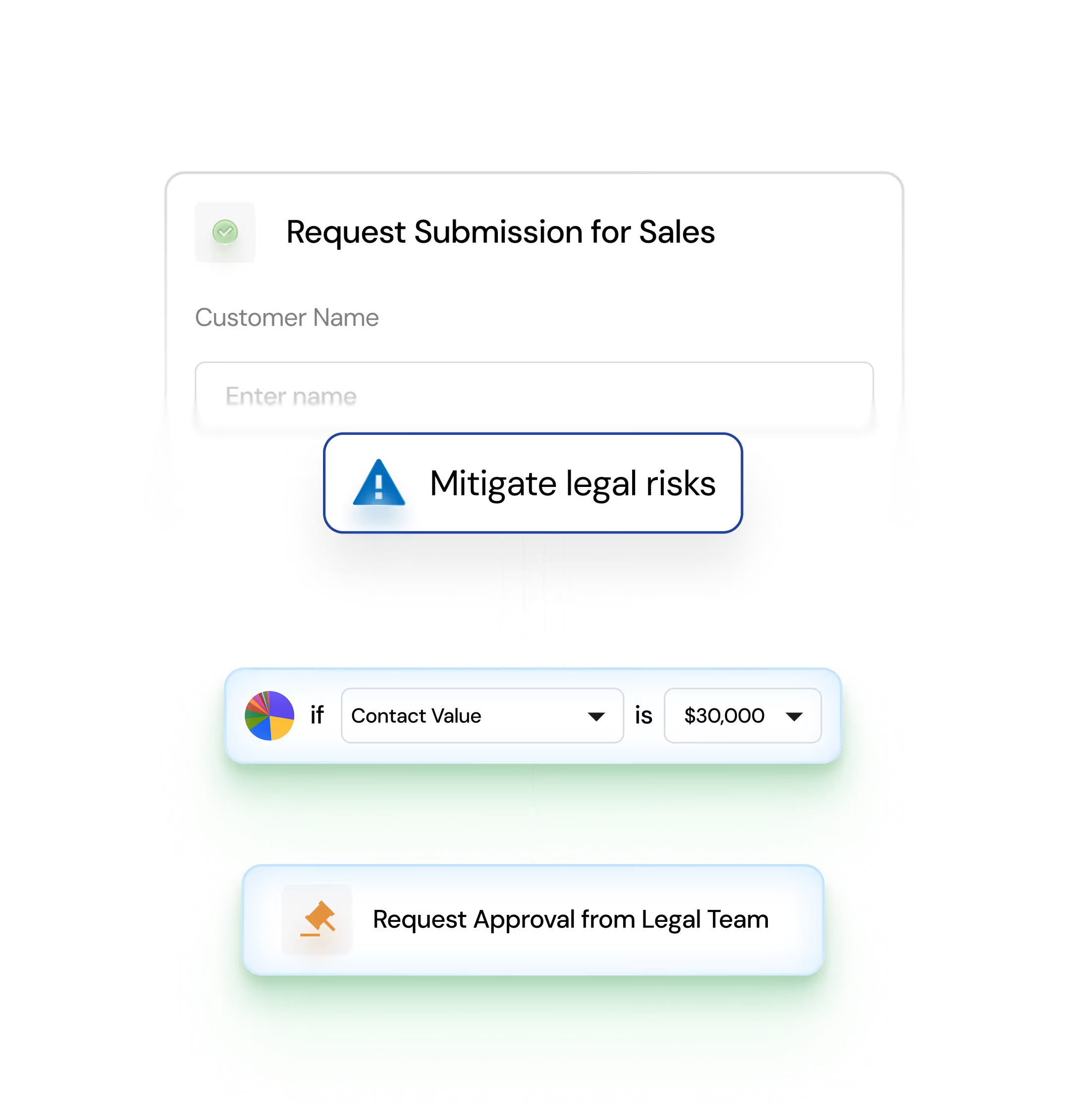
Streamline AI is legal intake software built for in-house teams. The business submits requests from Slack, email, Salesforce, or a simple form, and every request lands in one queue, sorted, prioritized, and routed to the right person automatically.

Every request is protected by SOC 2 Type II controls, SSO, and role-based access. See how Streamline secures legal data.

What is

legal

intake

software?

Legal intake software is the front door for an in-house legal team. It collects every request the business sends to legal, captures the details legal needs up front, and sorts and routes each request to the right person, so nothing gets lost in email threads or chat messages. Good legal intake software also tracks status and turnaround, so legal can see its workload and the business can see where its request stands.

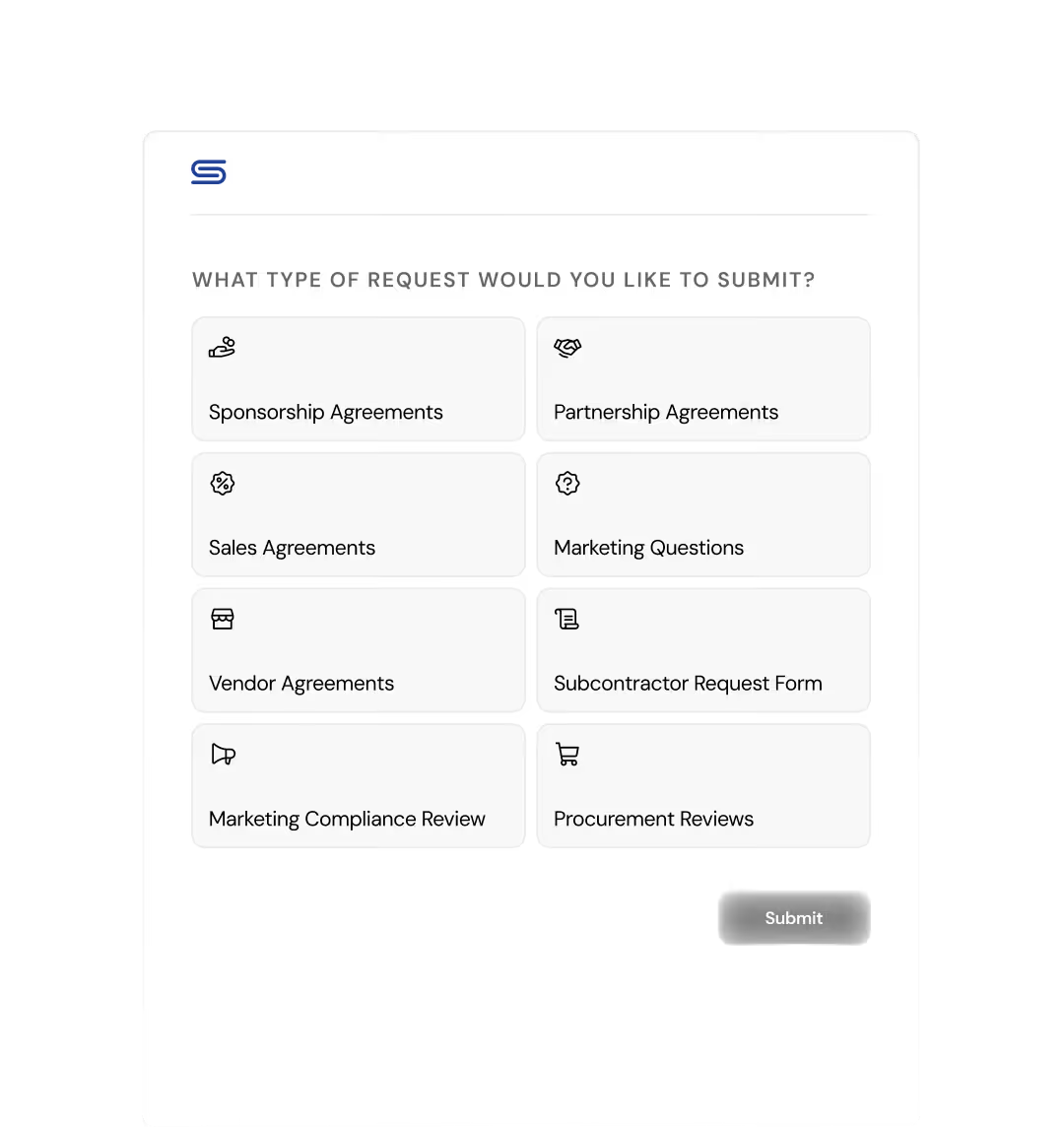
Automated legal intake, from request to the right reviewer

Requests from anywhere

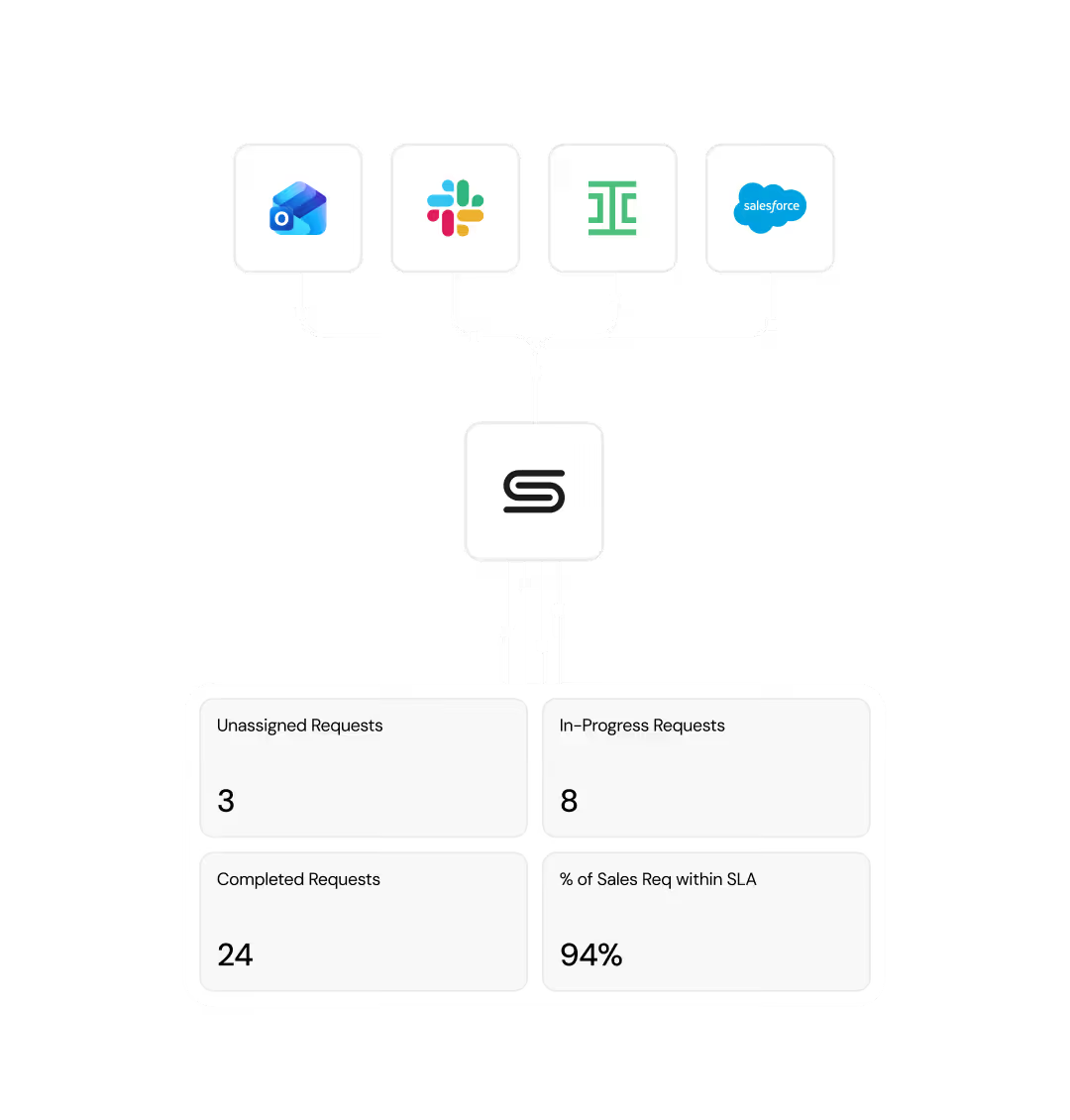
Business teams submit from Slack, Microsoft Teams, email, Salesforce, or a request form, so legal does not have to change how people ask for help.

AI classification

Each new request is classified by type, and the key details are pulled into a structured record, so legal starts with what it needs.

Routing rules

Requests go to the right attorney or team based on type, business unit, deal size, or any field on the form.

Cross-functional approvals

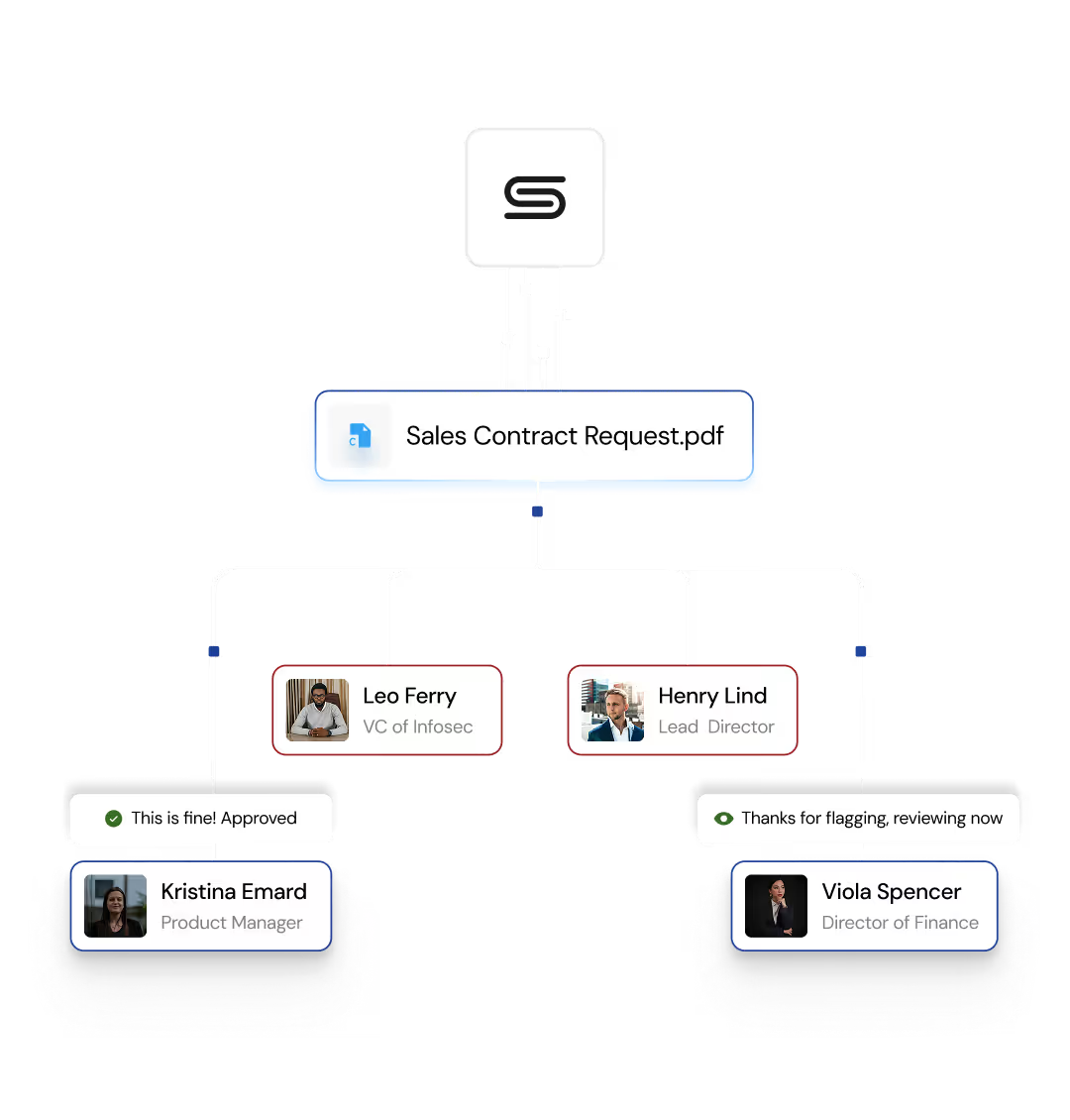
When a request needs sign-off from Finance, Security, or Procurement, approvals run in order and everyone sees where things stand.

Status the business can see

Requesters get automatic updates, so legal spends less time answering "where is my contract?"

Built for in-house legal, not law firm client intake

Most legal intake software is built for law firms signing up new clients: lead capture, conflict checks, and consultation scheduling. In-house legal intake is a different job. Requests come from colleagues across Sales, Procurement, Marketing, and HR, many of them repeat requests, and the goal is fast, consistent turnaround. Streamline AI is built as the legal front door for that work, with intake from the tools the business already uses and reporting on volume and response times.

“We’ve cut down on the email conversations
we need
to have. We’re saving anywhere from 30 minutes to an
hour
right from the start.”
Joseph Vitelli
Director of Procurement & Inbound Licensing Counsel, 8x8
Read Case Study
Abstract green and white textured background with a frosted glass effect.Blurred green and beige abstract background with a textured, frosted glass effect.White text '8x8' centered on a solid red background.

Integrates with the tools you already use

Discover how Streamline AI's pre-built integrations can enable your legal and business teams to work seamlessly together, where and how they want to work.

Legal intake FAQs

What is intake software?

Intake software gives a team one place to receive, sort, and track requests. For in-house legal, it captures requests from forms, email, and Slack, triages them by type and urgency, and routes each one to the right lawyer.

Common features include custom forms, workflow automation, status tracking, and reporting.

White stylized letter S logo on a gradient blue and green background.

How does legal intake work for in-house legal teams?

Legal intake is the process by which legal departments receive and prioritize requests from business departments such as Sales, Marketing, and HR. These matters typically include reviewing sales contracts, vendor agreements, marketing compliance, open-source licenses, and NDAs. Given the high volume of requests and the need for quick turnaround, legal teams need streamlined processes and tools to manage tasks efficiently and assign them to the right experts.

White stylized letter S logo on a gradient blue and green background.

What kinds of legal requests can be managed by legal intake software?

Legal intake software handles every type of legal request, including the repetitive, high-volume work that slows teams down. This type of legal intake automation software intelligently sorts and processes requests, reducing administrative work and improving efficiency.

Examples of legal requests that can be managed by legal intake software:

  • Contracts: Employment, NDAs, sales agreements, vendor agreements, software license reviews, SLAs, data processing agreements, partnership agreements, open source license reviews, BAAs, contractor agreements.‍
  • Requests: Legal opinions, marketing compliance, marketing reviews, Deal Desk reviews, Employee matters, regulatory compliance inquiries, data privacy, trademark and patent filings, AI tool requests, subpoenas, IP disclosures, privacy requests, compliance, and ethics questions.
White stylized letter S logo on a gradient blue and green background.

What are some best practices for designing a legal intake form?

Think like the requester. What would make you fill out the form quickly and accurately? Use precise, specific questions to gather the right details, and apply conditional logic to show only relevant fields. Keep the flow intuitive by starting with simple questions and progressing to more complex ones, while grouping related fields together for clarity. Most importantly, keep the form concise by including only what’s necessary to avoid overwhelming users.

White stylized letter S logo on a gradient blue and green background.

Where can I find sample intake form questions for in-house legal departments?

Streamline AI’s template library is a good source of sample intake form templates, including a sales request intake form, a vendor management intake form, and a privacy request template. A good form is only one piece. To speed up legal requests, pair it with workflow automation that handles triage and assignment.

White stylized letter S logo on a gradient blue and green background.

What features should in-house legal intake software have?

Look for intake from the tools your business already uses (e.g., Slack, Microsoft Teams, email, Salesforce), forms legal can build and change without IT, automatic triage and routing, approval workflows across departments, status updates for requesters, and reporting on request volume and turnaround.

White stylized letter S logo on a gradient blue and green background.